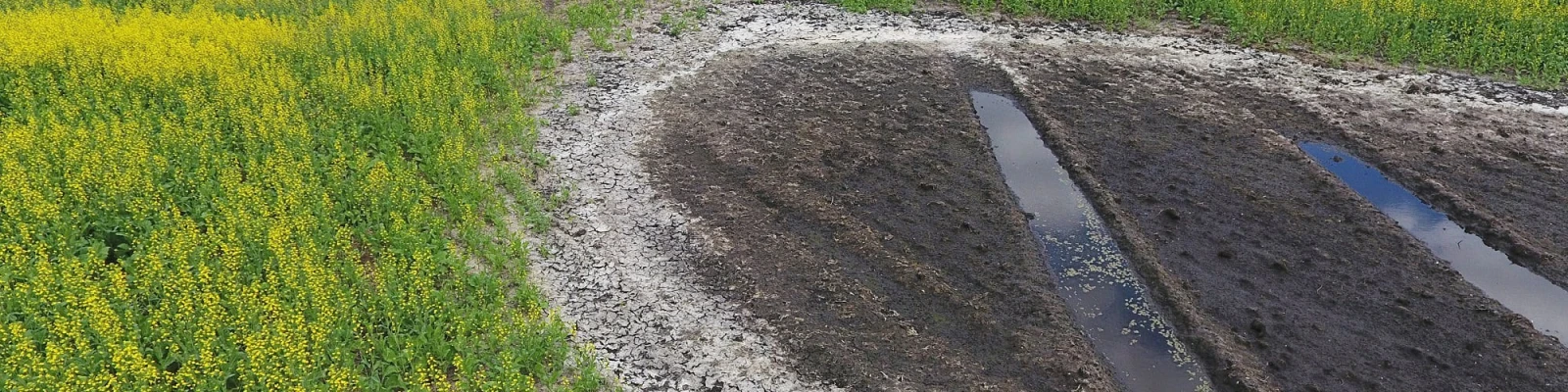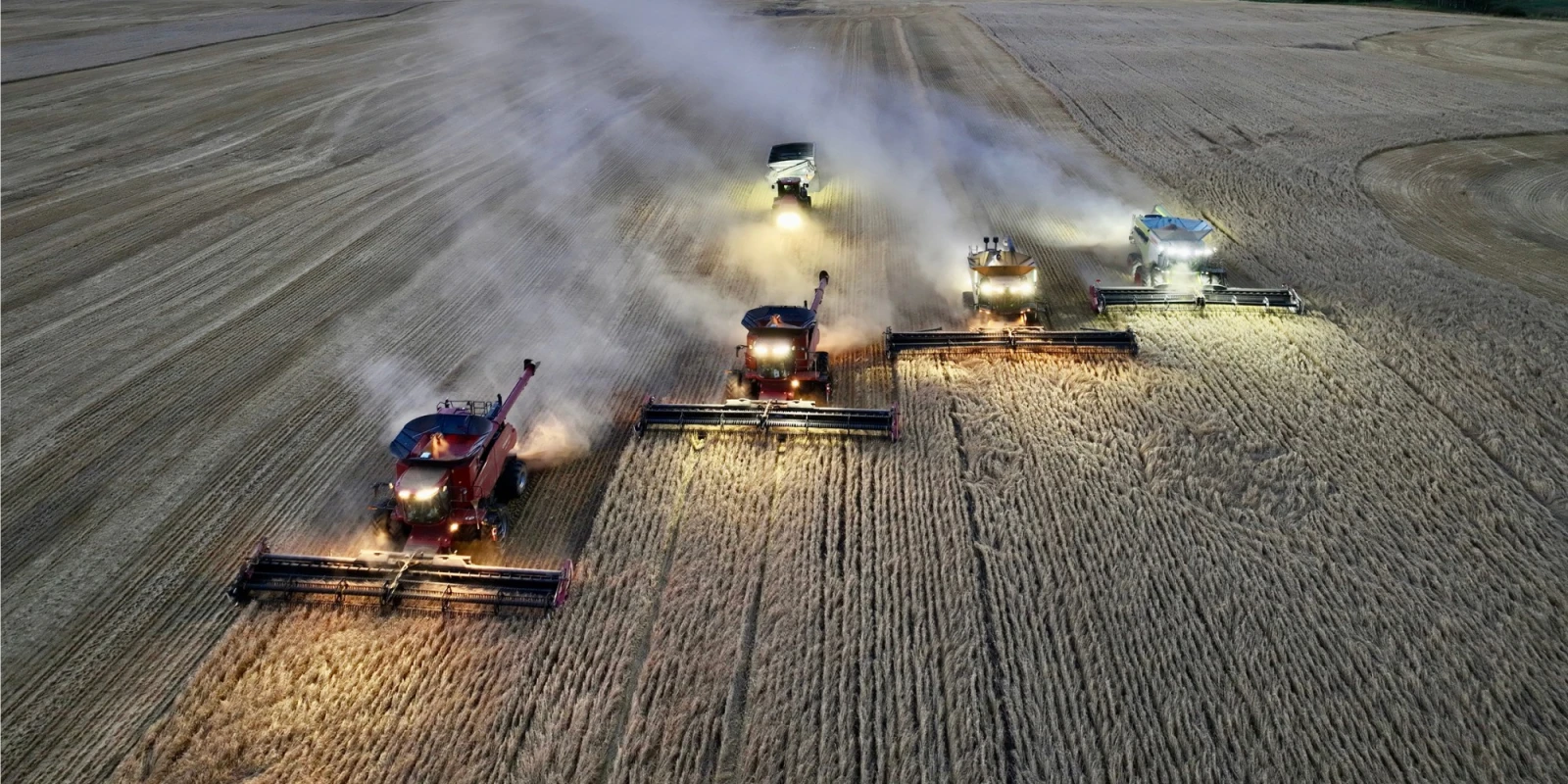
Responsible water management protects Saskatchewan farmland. SaskFSA advocates for clear, practical water management policy that allows farmers to manage water responsibly while protecting the environment.
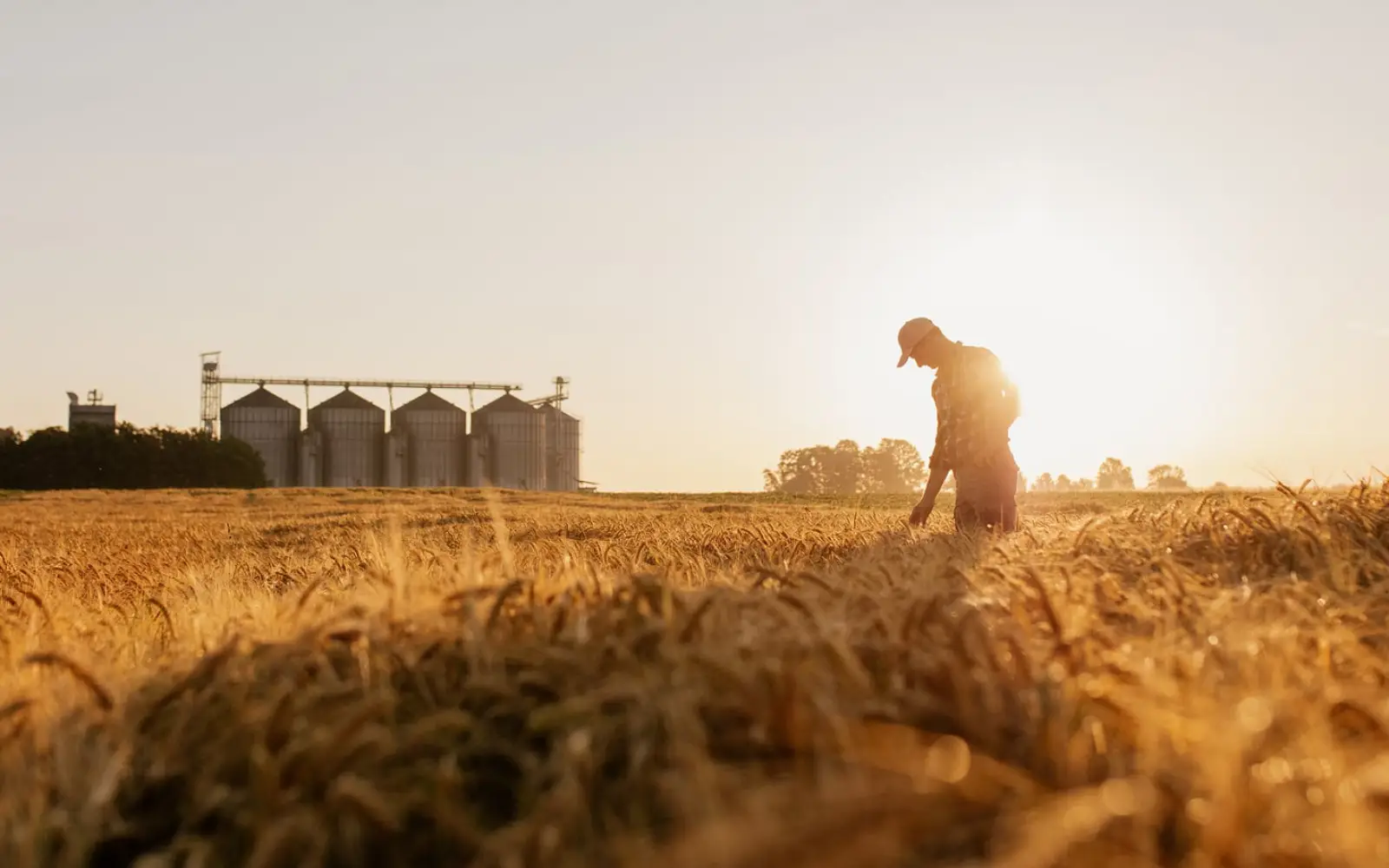
Responsible Drainage Keeps Productive Farmland Working
Agricultural water management, or just drainage, helps farmers manage excess temporary and seasonal water, protect soil health, improve field efficiency, and keep productive land in food production.
With over 38 M acres of annual crop production in the AG Zone (the region with the right soil and climate capable of food production) we have an enormous responsibility to optimize field efficiency. Field Efficiency is the single most important variable related to sustainability in Canadian agriculture.
Field efficiency is the responsible drainage of excess temporary and seasonal field water to protect soil and crop health, improve field agronomics and support environmental stewardship.
The result of field efficiency is a:
- Reduced compaction and salinity
- Healthier microbiome
- Reduced abiotic stressors
- Reduced overland flooding and nutrient washouts
- Enhanced crop production and yield
- Reduced carbon footprint
Saskatchewan farmers contribute to global food security.
However, the AG Zone is regionally diverse and extremely variable from year to year. Some years and some areas can require extensive management to ensure field efficiency, and the most vulnerable AG zones and water sources are protected.
In fact, the most vulnerable areas rely on water management the most.
Managing the excess, temporary and seasonal water within the AG zone allows the AG zone to function optimally. This is done with drainage management (drainage), which is the process of removing or consolidating excess water to remove temporary and/or seasonal water to make land available for agriculture.
By choosing to join or sponsor SaskFSA, you are helping to keep drainage policy practical, farmer-led, and focused on long-term land stewardship.

Responsible Drainage Is Managed, Designed, and Accountable
Effectively managing water is a complex process that includes:
- Coordination through network approvals
- Best practices in design and construction
- Flow controls and gates
- Erosion control
- Timing restrictions and setbacks
- Land control
- The use of Beneficial Management Practices
Fully managed drainage systems provide effective flood control, function as spring and in-season holdbacks, allow for water table recharge and provide flow controls. Drainage management also means food production, field efficiency and agronomic stewardship while providing environmental benefits.
Unmanaged Water Creates Real Costs for Farmers
The Saskatchewan landscape is not flat, and farmers often report 30 potholes or more per quarter section. When these temporary wet land potholes are unmanaged, it significantly decreases productivity and add significant costs for farmers.
- Increased turn time to travel the field for each pass.
- Wasted crop inputs
- Additional management hours for each field
- Higher fuel costs
- Increased equipment maintenance expenses
Our research shows that unmanaged temporary water costs as much as $170 per acre due to loss of productivity and additional production costs.
$170/acre x 5000 acre farm = $850,000
Help Protect Farmer-Led Water Management in Saskatchewan
SaskFSA works with government, regulators, and landowners to support practical water management policy that works on real farms. If responsible drainage matters to your farm, your voice should be part of the policy conversation.